Every solar panel loses power as it gets hotter. That’s basic physics, not a defect — but it matters a lot more in Sharjah or Dubai in July than it does in, say, Germany, where most panel technology was originally designed and tested. A standard panel sitting on a UAE rooftop can easily run 25–30°C above ambient air temperature in peak summer, and that heat is quietly eating into the very output you bought the system for.
This is the actual reason AIKO ABC solar panels are worth understanding before you buy, rather than just picking whichever panel a quote sheet lists first. ABC — All Back Contact — isn’t a brand name or a marketing label, it’s a genuinely different way of building the cell, and the design choices behind it happen to line up well with exactly the conditions the UAE throws at a rooftop. If you’re already running standard panels and thinking about expanding your system, this is also the logic behind our ABC upgrade path for existing installations.
What “All Back Contact” Actually Means
On a conventional solar panel — the kind most installers in the UAE still quote by default — you can see thin metal lines running across the front of each cell. Those are busbars and grid fingers, and their job is to collect the electrical current the cell generates. The catch is that every millimeter of metal on the front of the panel is also blocking sunlight from hitting the silicon underneath it. It’s a trade-off the industry has lived with for decades: you need the metal to collect the power, but the metal itself reduces the power you can collect.
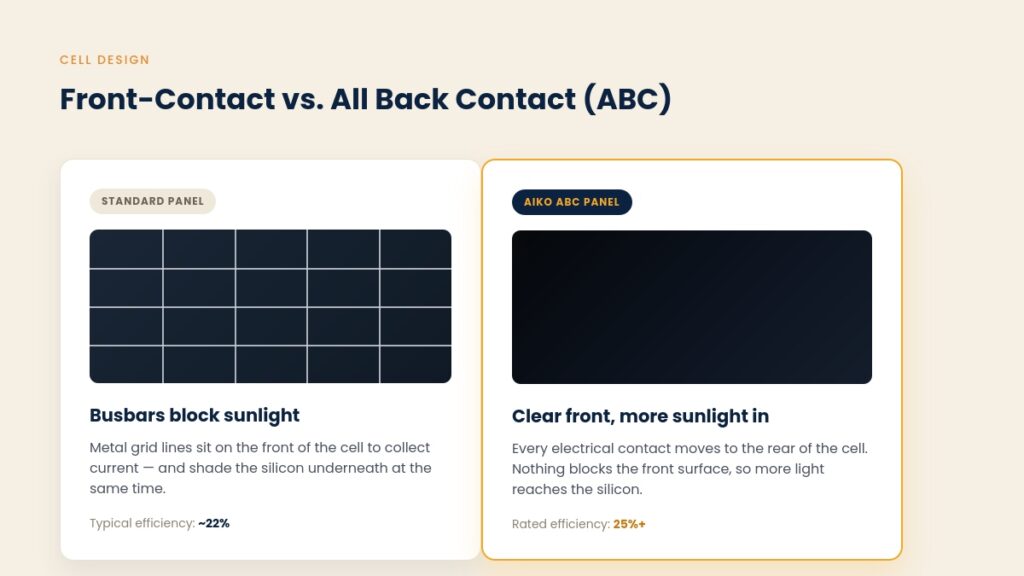
ABC technology removes that trade-off by moving every single electrical contact to the back of the cell. There’s nothing on the front surface but silicon — no visible grid lines, no busbars. That gives the cell a larger usable surface area for capturing sunlight, which is part of why ABC panels reach efficiency ratings above 25%, noticeably higher than standard PERC panels and a step above most TOPCon panels too. It’s also why they have that clean, uniform black look, which matters if you care about how the system looks on a villa roof or a visible commercial façade — not just how it performs.
Why This Matters Specifically in UAE Heat
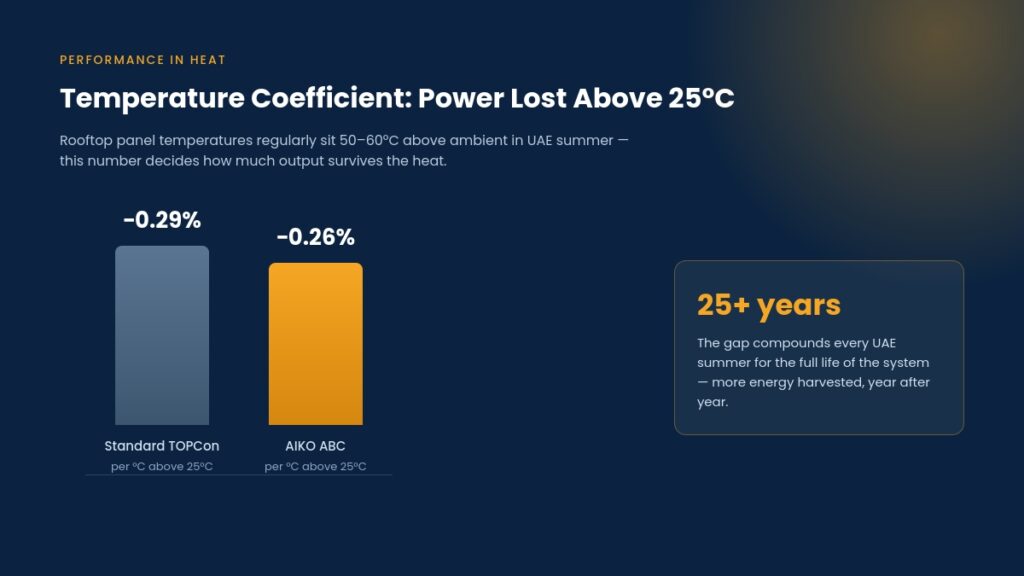
Efficiency at room temperature is only half the story. The number that actually determines how a panel behaves on a real UAE roof in August is its temperature coefficient — how much power output drops for every degree the panel heats up above 25°C.
Standard TOPCon panels typically carry a temperature coefficient around -0.29%/°C. AIKO’s ABC panels are rated at -0.26%/°C. That looks like a small difference on paper, but run the math across a UAE summer: with rooftop panel temperatures regularly sitting 50-60°C above ambient at midday, that gap compounds into a meaningful amount of extra energy harvested over a full cooling season — and it repeats every single summer for the 25+ year life of the system.
The back-contact design also runs cooler for a structural reason, not just a ratings-sheet reason: without front-side metal absorbing and re-radiating heat, and with a more uniform cell surface, the panel manages heat more evenly. That has a secondary benefit worth knowing about — fewer localized “hot spots,” which is both a small efficiency gain and a real fire-risk and longevity factor on panels that sit in direct desert sun for a decade-plus.
More Power for the Same Roof Space
Roof space is a real constraint here, especially on Dubai and Sharjah villas with AC units, water tanks, and parapet walls already competing for the usable area, and on commercial roofs where you’re often maximizing output against a fixed footprint. Because ABC cells pack more active surface into the same panel dimensions, a single AIKO ABC module typically outputs more watts than a same-sized standard panel — which is why you’ll see our Stellar series panels reaching well past 650W in a footprint where older panel generations would top out considerably lower.
For a homeowner, that translates into hitting your target system size — a 5kW or 10kW setup, for example — with fewer panels and less roof taken up. For a commercial site evaluating utility-scale solar, the same math scales up: more kW installed per square meter of available roof or land, which directly improves the project’s return.
Better Behavior Under Partial Shade
UAE rooftops are rarely obstruction-free — chillers, satellite dishes, adjacent buildings, and the panels’ own mounting hardware all cast shadows at different times of day. On a conventional panel, shading even one cell can drag down the output of an entire string, because of how the cells are wired together. AIKO’s ABC design includes shading optimization at the cell level, so a partially shaded panel keeps contributing meaningfully instead of dropping off a cliff. If your roof has any real-world obstructions — and most do — this matters more for actual annual output than the headline efficiency number does.
Degradation and Long-Term Output
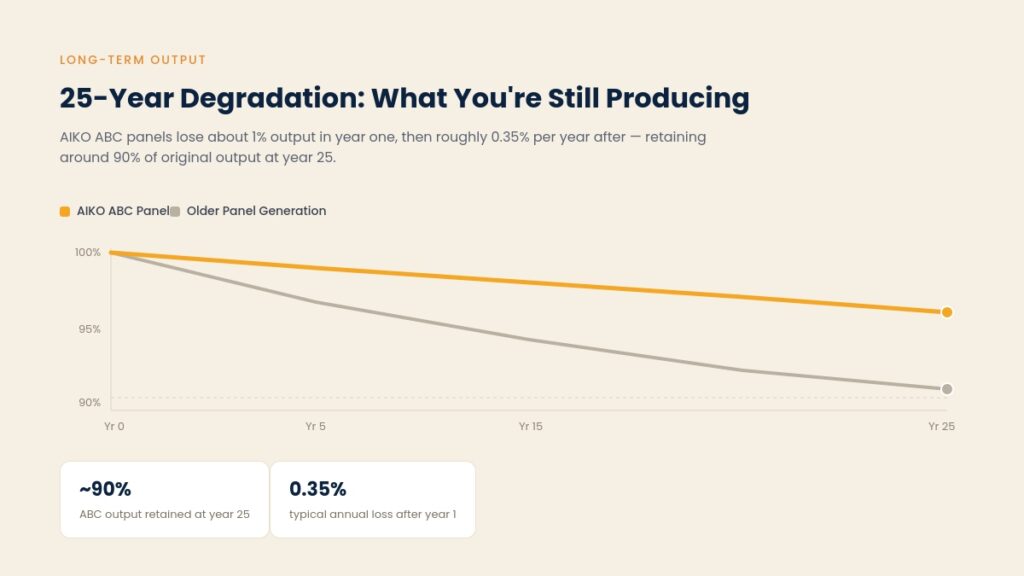
The number most people skip past on a spec sheet is degradation — how much the panel’s output declines year over year. AIKO’s ABC panels are rated for roughly 1% output loss in the first year and no more than about 0.35% per year after that, which works out to retaining somewhere around 90% of original output after 25 years. That’s a meaningfully slower decline than older panel generations, and it’s the number that actually determines what your system is still producing a decade or two into ownership — which matters more for solar EPC buyers who own the system outright than it does for a short-term lease.
How This Fits Into a Full LIT Energy System
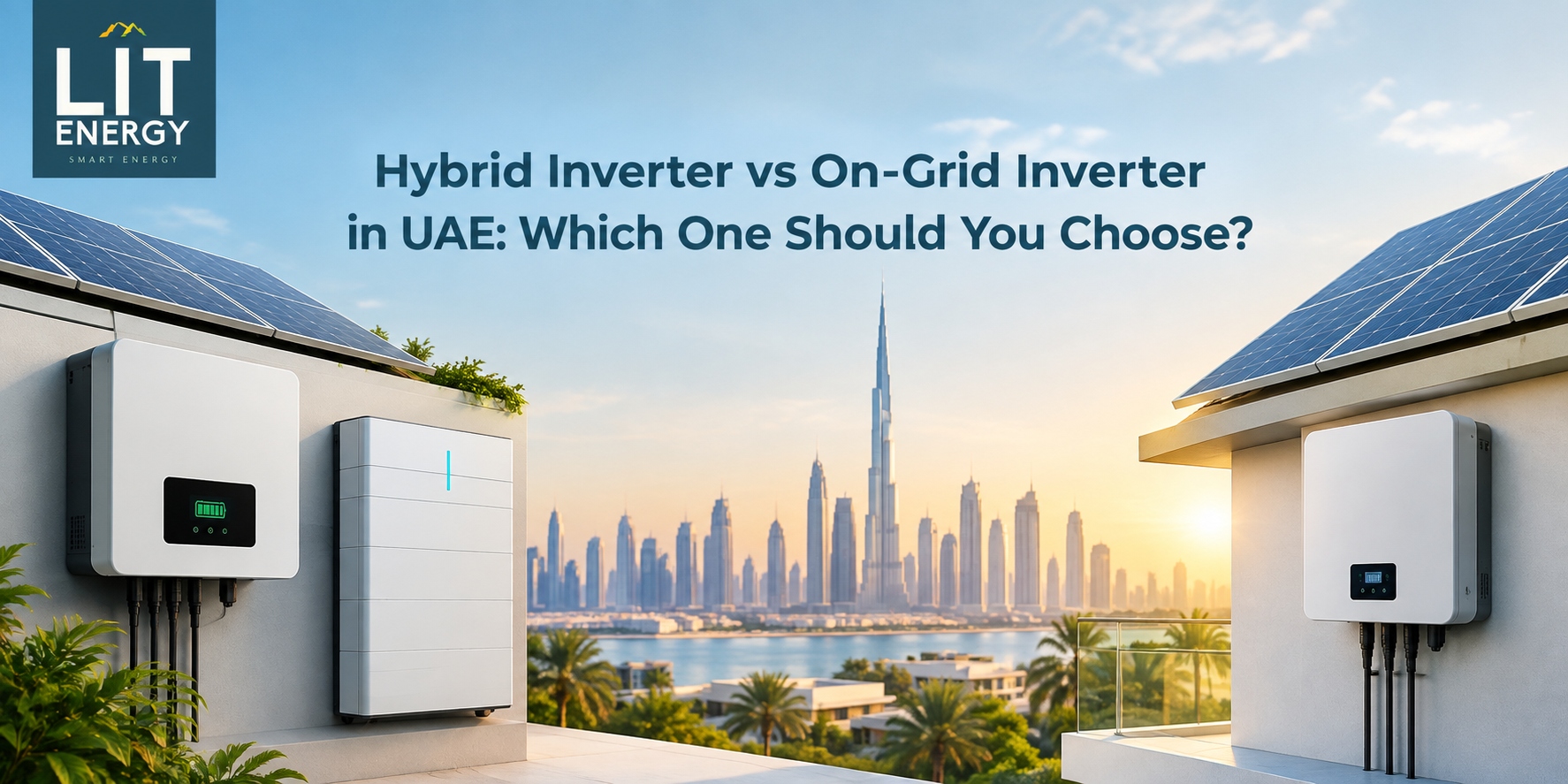
The panel is one part of the system, not the whole story. Pairing AIKO ABC panels with the right hybrid inverter matters just as much — an inverter that’s undersized or poorly matched will bottleneck exactly the extra output you’re paying the ABC premium for. For sites that want backup power or to shift more consumption to solar hours, we typically pair the panels with an energy storage system sized to actual usage patterns. And because heat-related performance is something you want to actually see, not just take on faith, every installation connects to the LitControl monitoring app so you can watch real output against expected output through the peak summer months.
Which Panel Fits Your Project
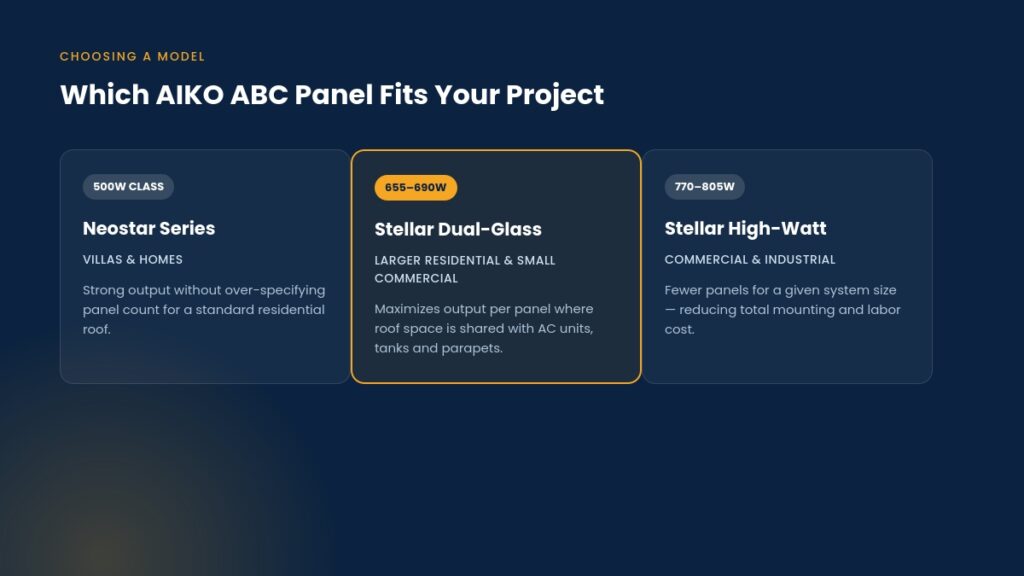
The AIKO ABC range spans residential to utility scale, and the right model depends mostly on space and budget:
- Villas and homes typically do well with the Neostar series in the 500W class — strong output without over-specifying panel count for a standard roof.
- Larger residential or small commercial roofs often move up to the Stellar 655W-690W dual-glass panels to maximize output per panel.
- Commercial and industrial sites working with more roof area or ground-mount space benefit from the higher-wattage Stellar 770W-805W range, which reduces the total panel count — and therefore mounting and labor cost — for a given system size.
If you’re comparing this against our full residential or commercial solar options, the panel choice is really the first decision, since it determines how many panels — and how much roof — the rest of the system needs to work around.
Is the Extra Cost Worth It?
ABC panels generally sit at a higher price point than standard PERC or entry-level TOPCon panels, and it’s a fair question whether that premium pays for itself. In most UAE cases it does, for three compounding reasons: more output per panel means fewer panels for the same target system size, which offsets part of the per-panel cost difference; the better temperature coefficient specifically protects output during the months when your electricity bill — and your solar system’s earning potential — is highest; and the slower degradation rate means the gap between an ABC system and a standard system widens every year the system is in service, not just on day one. For an exact comparison against your specific roof and consumption, it’s worth requesting real numbers rather than relying on general rules of thumb — our catalog and full specification sheets have the detailed figures for every model in the range.
Frequently Asked Questions
What does “ABC” mean in AIKO ABC solar panels?
ABC stands for All Back Contact — a cell design that moves every electrical connection to the rear of the panel, leaving the front surface completely clear for capturing sunlight.
How is ABC different from PERC or TOPCon panels?
PERC and TOPCon panels still route some electrical contacts across the front of the cell, which blocks a portion of incoming light. ABC eliminates that entirely, which is a large part of why ABC panels reach higher efficiency ratings and perform better under heat and partial shade.
Do ABC panels really perform better in UAE heat, or is that marketing?
It comes down to the temperature coefficient — a measurable, published spec, not a marketing claim. AIKO’s ABC panels are rated at -0.26%/°C versus roughly -0.29%/°C for standard TOPCon panels. That gap is small on any single day but adds up to a real difference in energy harvested across a UAE summer, every year the system operates.
Are AIKO ABC panels more expensive than standard panels?
Generally yes, per panel. But because each panel produces more power, fewer panels are typically needed for the same target system size, and slower long-term degradation means the output gap versus standard panels widens over the life of the system.
Can I upgrade an existing solar system to ABC panels?
In many cases yes, depending on your current inverter and system design. See our ABC upgrade page for what’s involved, or get in touch and we’ll assess your existing setup directly.
How long do AIKO ABC panels last?
They’re rated for roughly 1% output loss in year one and about 0.35% annual degradation after that — translating to around 90% of original output retained after 25 years, which is in line with or better than the industry’s leading panel warranties.
Want to see exact wattage, pricing, and warranty details for a specific roof size? Browse the full AIKO ABC panel range or get in touch for a system sized to your actual consumption.